
PGD & PGS Services at Benecare Hospital, Pune
Welcome to the Child Care & Pediatrics department at Benecare Hospital in Pune. Our dedicated team of highly skilled paediatricians and childcare specialists are committed to providing exceptional and individualized care for infants, children, and adolescents. We offer a comprehensive range of services, ranging from routine check-ups and vaccinations to developmental assessments and specialized treatments for complex medical conditions. With a focus on compassion and expertise, we strive to ensure the health and well-being of every child under our care.

- Award winning Medical Experts
- State-of-the-art Facilities
- High-Tech Medical Equipment
- Highly Experienced Doctors

Preimplantation Genetic Diagnosis (PGD)
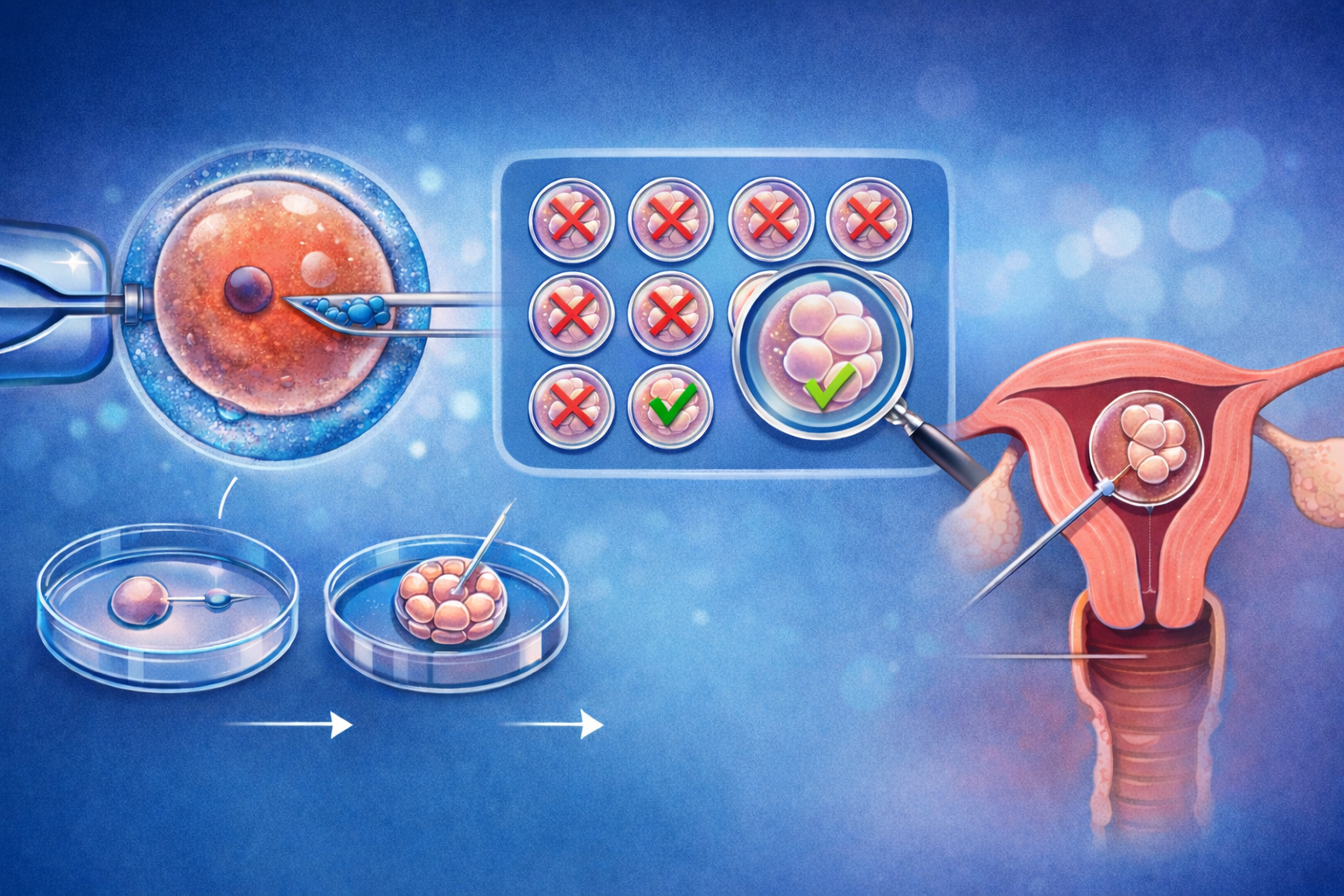
Preimplantation Genetic Diagnosis (PGD), also referred to as Preimplantation Genetic Testing (PGT), is used in specific clinical situations such as a known family history of genetic conditions, recurrent pregnancy loss, or previous IVF outcomes requiring further evaluation.
PGD involves testing embryos created through IVF for particular genetic conditions prior to transfer. Embryos identified as suitable based on the assessment may then be selected for implantation, allowing for a more informed and individualized treatment approach.
Preimplantation Genetic Screening (PGS)
Preimplantation Genetic Screening (PGS) is used to assess embryos for chromosomal variations. This screening helps specialists evaluate embryos based on chromosomal composition, supporting careful selection as part of the IVF process.
PGS may be considered to assist with embryo selection by identifying those with the appropriate number of chromosomes, following medical consultation. The decision to proceed with PGS is guided by individual clinical factors and specialist recommendations.
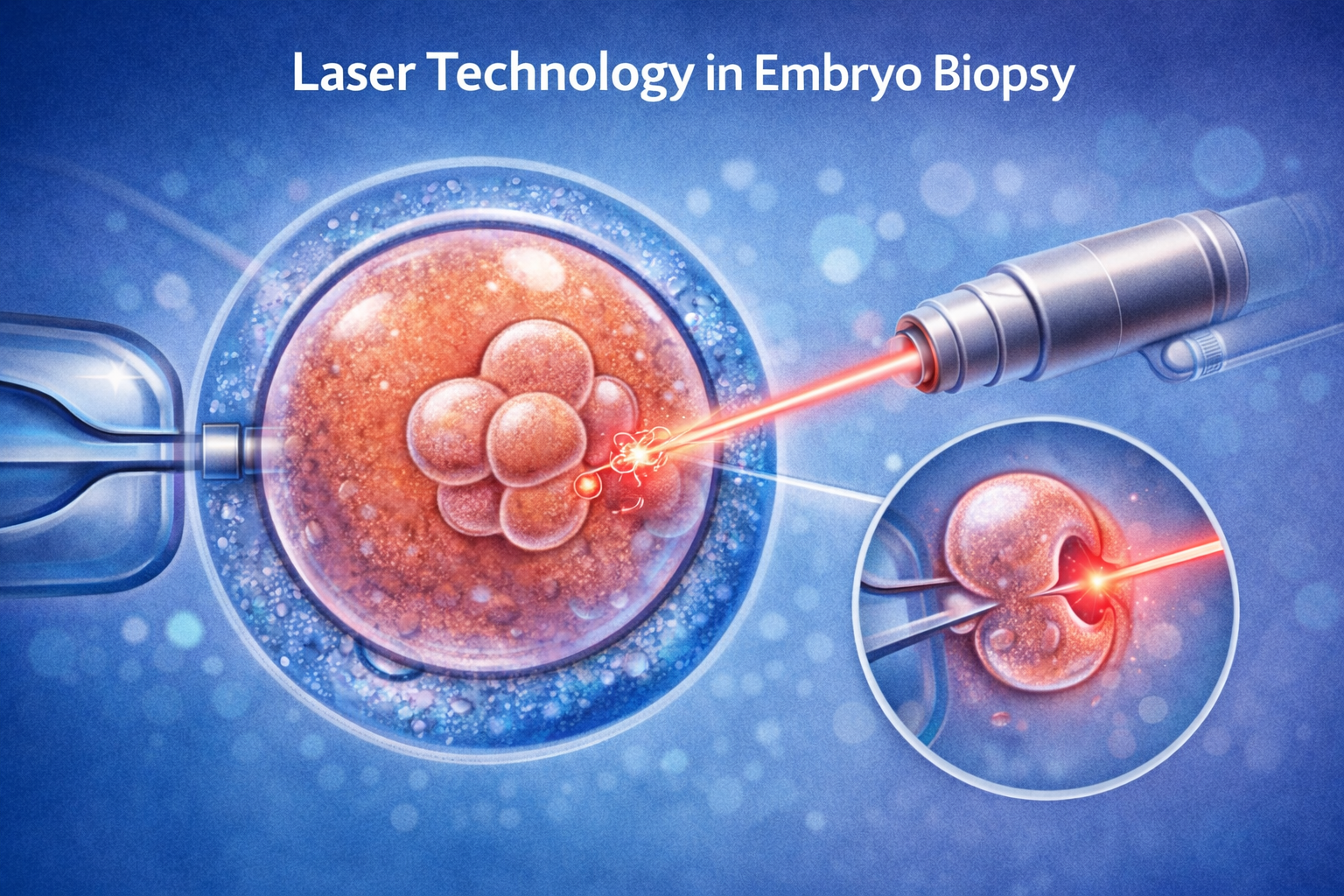
Role of Laser Technology in Embryo Biopsy
During Preimplantation Genetic Testing (PGT), Benecare Hospital uses precision laser technology to assist in embryo biopsy. Laser-assisted techniques enable controlled access to embryonic cells with minimal manipulation, supporting laboratory accuracy, safety, and embryo integrity under expert embryology supervision.
Why Choose Benecare Hospital for Preimplantation Genetic Diagnosis?
Benecare Hospital in Pune is trusted by individuals and couples seeking a personalized, compassionate approach to fertility care. Our multidisciplinary team – including fertility specialists, genetic counsellors, nursing professionals, and experienced laboratory staff – works collaboratively to provide coordinated care and consistent support throughout the treatment journey. Benecare hospital provides laser biopsy of the embryo which is the gold standard all over the world & also Benecare hospital practices non invasive PGT.
With a strong focus on advanced, technology-led genetic testing, Benecare Hospital supports informed decision-making through structured genetic counselling and individualized care planning. Every step of the process is guided by clinical expertise, attention to detail, and a commitment to patient confidence and clarity.
- Advanced Embryo Selection – Advanced Embryo Selection (AES) integrates established laboratory technologies to support careful embryo evaluation as part of the IVF process. Through the use of preimplantation genetic testing, embryos may be assessed for genetic or chromosomal factors prior to transfer.
This approach allows the clinical team to identify embryos suitable for implantation based on defined quality parameters, supporting informed selection and individualized treatment planning. AES is considered to enhance treatment precision while helping reduce the likelihood of certain inherited genetic conditions, following appropriate medical consultation.
- Supporting Improved Pregnancy Outcomes – Preimplantation Genetic Testing (PGT) may support embryo selection by identifying chromosomal factors prior to transfer. By evaluating embryos for genetic considerations, specialists are able to make more informed decisions when planning implantation.
At Benecare Hospital, PGT is applied thoughtfully as part of an individualized treatment approach, helping align embryo selection with clinical findings and patient-specific factors. This structured evaluation supports treatment precision and may contribute to more favorable pregnancy outcomes when compared with conventional selection methods, following appropriate medical guidance.
- Reduced Risk of Genetic Conditions – Preimplantation Genetic Testing (PGT) may help reduce the likelihood of passing on certain inherited genetic conditions by allowing embryos to be evaluated before transfer. This option can be particularly relevant for individuals or couples with known genetic risks or family histories.
By supporting informed embryo selection, PGT offers reassurance and clarity during the IVF process, helping address genetic considerations early while easing some of the emotional and decision-related challenges associated with hereditary conditions. The use of PGT is always guided by detailed clinical assessment and genetic counselling.
- Supporting IVF Treatment Outcomes –
The use of Preimplantation Genetic Testing (PGT) alongside in vitro fertilization (IVF) may support more informed embryo selection as part of the treatment process. By evaluating embryos for genetic and chromosomal factors prior to transfer, specialists can plan implantation with greater clinical insight.
This careful selection approach helps reduce uncertainties associated with genetic or chromosomal variations and supports treatment precision, contributing to a more structured and confidence-driven IVF journey under appropriate medical guidance.